I Ching
Maps movement
See the pattern, season, tension, and direction already unfolding in a situation.
An original East–West wisdom method
I Ching maps the movement of a situation. Tarot reveals its archetypal, human experience. TarotChing fuses both into one reflective synthesis—then lets you stay in conversation with it.
✦ Built for reflection and personal insight—not prediction or therapy.
What is changing—
and what is asking
to be understood?
The method
I Ching maps 64 movements. Tarot reveals 78 archetypes. TarotChing merges their wisdom into thousands of precise, unique fusions—holding the outer movement of life and the inner language of meaning in the same frame.
I Ching
See the pattern, season, tension, and direction already unfolding in a situation.
Tarot
Meet the archetypes, feelings, roles, and human choices inside that movement.
TarotChing
Bring movement and meaning together into a reading you can return to, question, and carry forward.
How a reading unfolds
Start with the situation that wants your attention, in your own words.
The fusion brings I Ching movement and Tarot imagery into one interpretation.
Choose an Oracle whose style helps you sit with the reading more clearly.
Save the reading, return to the exchange, and notice what changes over time.
Meet the Oracles
A reading is not just about the wisdom, but the interpretation of it. TarotChing features multiple readers that act like real people, ready to converse in multiple languages.
A practice that remembers
TarotChing becomes more relevant through the context you choose to save—always yours to shape, review, or leave blank.
Read together over time and build a visible affinity with the Oracle whose perspective you return to.
Keep separate spaces for different people or chapters of life, with optional personal context for each.
Filter your reading history by person, reopen a saved exchange, and clear up what still feels noisy.
Access hundreds of readings across different themes completely offline. Your journal stays local by default, so your wisdom always stays yours.
Why Jung?
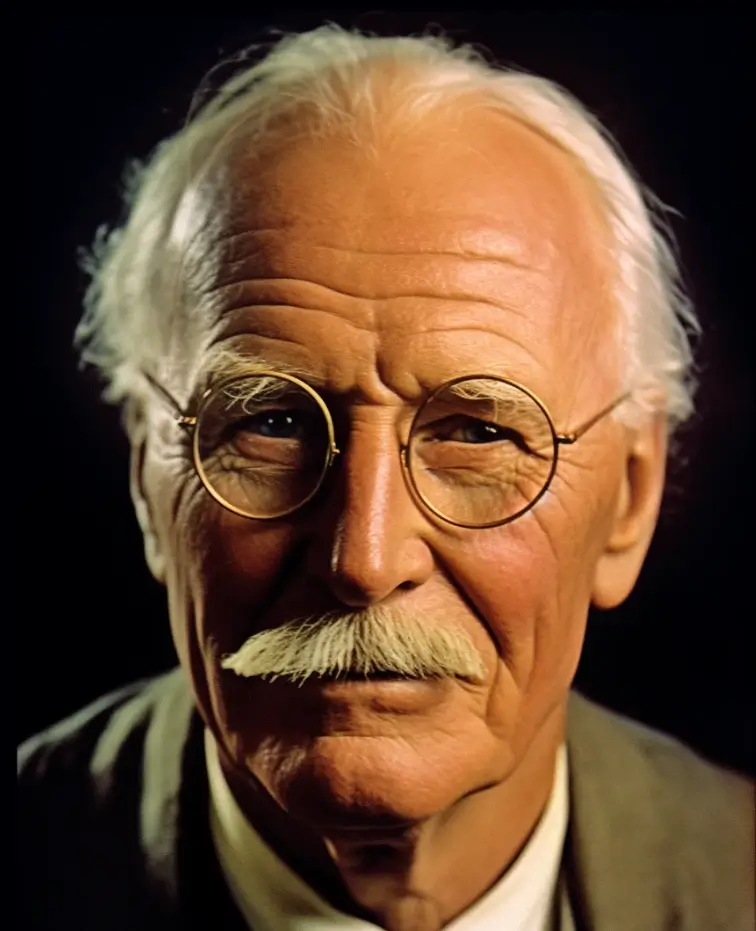
Carl Jung’s engagement with the I Ching, alongside his work on archetypes and synchronicity, is part of the intellectual atmosphere behind TarotChing. It gives us a language for reflection—not proof of divination, diagnosis, or therapy.
Historical context: Jung’s foreword to the I Ching and the International Association for Analytical Psychology on synchronicity.
Begin with what matters
Make space to see it from both directions.
Get started